See you soon

I’m excited to announce that I will be speaking at two conferences this year!

If you’re on your way to Agile2013 in Nashville in August, please stop by my full-length Big Visible Testing session in the experience report track. I simply didn’t have enough time to tell you all the cool stuff in my CAST 2012 emerging topic.
If you’re excited about trying exploratory testing with some in-person coaching, Matt Heusser and I will be there for you.
Or catch up with me some time that week to say hi.
Agile2013_Speaker_banner


If you’re on your way to CAST 2013 in Madison in August, start out your conference with my Walking Skeletons, Butterflies, & Islands: an agile journey experience report.
I look forward to fielding your questions about agile testing!
CAST2013_LessonsLearned

Sadly, my talks will not be streamed online this year, but you might enjoy the webCAST lineup!

Ash-ceptance Criteria

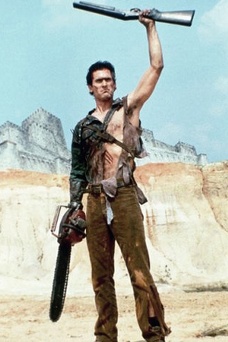
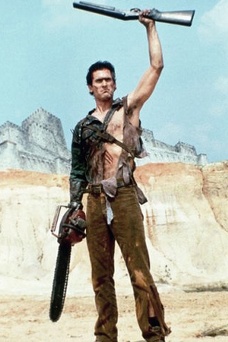
Ash-2Weapons
Someone asked me for examples of testable acceptance criteria… Alright. Who wants some?

User story:
As Ash, I want to defend myself against deadites (undead creatures) so that I can retrieve pages from the Book of the Dead.

Acceptance criteria:
– defend from a distance
– defend at close range

Two distinct pieces of value, huh? Clearly, we need a story split here!

User story:
As Ash, I want to repurpose the stump of my right arm into a fearsome weapon so that I can defend myself against undead creatures at close range.

Acceptance criteria:
– portable
– well supported, weight-balanced
– hands-free operation
– use available materials
– holds up under stress
– close-range fighting

Technical implementation:
– leather harness
– chainsaw mounted on handcuff
– chainsaw pull operated via bracket on harness

User story:
As Ash, I want another weapon for my left hand so that I can defend myself against undead creatures at a distance.

Acceptance criteria:
– portable
– easy storage
– one-handed operation
– uses available materials
– distance fighting

Technical implementation:
– sawed-off shotgun
– uses right-hand-mounted chainsaw to saw off shotgun (story dependency or taking advantage of existing features?)
– convenient back holster

Bonus feature/discovered value:
– clever shorthand terminology: “Boomstick”

By now, the distinction between testable user story acceptance criteria focused on user value and the resulting technical implementation should be painfully clear. Groovy?

Tonight’s episode is brought to you by: the beauty of claymation, the number 2, and the words Klaatu… verata… n… Necktie. Nectar. Nickel. Noodle.

Image source

Bedside manner

little_shop_horrors_dentist
This morning, stuck in the dentist’s chair again, I was contemplating with dread the work to be done. You see, I’ve had many dentists over the years and have only recently found one I like. It’s not the movie in the background to distract me, though that is nice. And it’s not the friendly manner of the staff, though that’s very important to me as well. It’s the deliberate communication.

Yesterday, at lunch, a friend and I were laughing at ourselves for having worked together in the past on a small team of 5 people and the communication problems that we had. While a larger team would certainly require more coordination, it is astonishing how easy it is for even a small, close-knit, co-located team to be deliberate about sharing information.

So back to sitting in this chair with the sound of the drill coming from the next exam room… When it is my turn, our 3 person team (dentist, hygenist, and patient) carefully coordinates the execution of today’s project with blow-by-blow commentary, making adjustments to each other as we go. And while the experience isn’t one I hope to repeat – you can bet my flossing will improve! – for the first time, I have complete trust in my dental team because they keep me constantly in the loop as a disciplined practice. And a little pain control doesn’t hurt either!

Image source

Rhythm section

camarolf-zydeco_tie

When I was a little girl, my mother took me to New Orleans. I was enchanted with the city and my experience there, not the least of which was experimenting with Cajun dancing and learning to play the washboard. As the New Radicals say, when “you’ve got the music in you / don’t let go,” so I suppose it was only natural that I decided to try becoming a percussionist in high school. Although I had the muscle memory for patterns involving 4 mallets and a foot pedal that garnered me vibraphone solos, I never learned to read music or march on the football field properly. In the Christmas show, our sleigh ride had a lame horse because I got out of sync and didn’t know how to recover, being an inexperienced musician.

Undeterred, I was always excited by the idea of playing the “toys” or strange percussion instruments that lurked in the back of the band classroom gathering dust. Sure, I’d tried playing a güiro, bar chimes, and maracas in elementary school music class, but the vibraslap, cabasa, and flexatone were new to me. Regrettably, most high school football game pep songs don’t call for that sort of thing, though indoor drumline competition allowed us a brief glimpse of the promised land in the form of tubular bells.

In recent years, my musical performances have been primarily vocal, though Michael Bolton can vouch for the my lack of skill with the bodhrán. (For the record, he rocks out on the mandolin.) And while I’ll never feel the rhythm of testing quite like Pete Walen, I keep my options open to try new instruments and approaches.

Telling compelling stories

One of the dozen books I’m currently reading is Edward de Bono’s Lateral Thinking. He mentions many useful ways to train yourself to become creative. I was thinking about these methods when considering the relationship between a user story’s acceptance criteria and the implementation that satisfies that need. In my daydreams, I am considering who to recruit for my next musical endeavor.

For every one with dollar signs in his eyes
There must be hundreds that look at you as if you’re some kind of
Rhythm section want ad
No others need apply to the rhythm section want ad
And here’s the reason why
– Rhythm Section Want Ad, They Might Be Giants

I immediately start down the list of musicians I know and don’t have a handy drummer to call. Then, I realize wanting to recruit a drummer is really just an attempt to satisfy my need for rhythm – and as I’ve seen with so many other performers there are so many more ways to accomplish that goal. If I’d phrased my requirement thus “As a person wanting to create a musical act, I want a drummer so that my song has rhythm,” I would have missed out on so many useful possibilities that occur to me when I challenge the assumptions in my own formulation of the problem and reject the dominant idea of a drum kit in favor of the crucial factor of rhythm.

By delaying my judgment, I open up the opportunity to brainstorm and generate alternatives to the cliché 90s rock band pattern that jumps out at me. So the key to my dilemma seems to be figuring out the right acceptance criteria (or user goals) that will tell me when I’m satisfied and then chatting up several of my musician friends who can propose diverse solutions to my problem (e.g. a sampler could give me all of the above).

I might even take some cues from established bands I’ve had the remarkable experience of seeing live and in concert who made alternative choices for their rhythm section, feeding the wannabe percussion geek in me. OK Go performed a gorgeous rendition of their song “What To Do” using handbells during a show here in Atlanta. During a visit to a friend, I saw Tilly and the Wall, a band that routinely performs with a tap dancer on a box providing some fascinating beats for their music.

While I might pull out a slide whistle to jam with my kids or spin a ratchet on New Year’s Eve, I’ll never be a hippie with a djembe. (Who knows? Perhaps I can find someone to teach me how to play a few beats at the DragonCon drum circle or the Georgia Renaissance Festival.) At least I know there are many more possible solutions for my future projects. And though I’m still holding out hope for that next ridiculous musical number, you won’t see me on Song Fight! any time soon… that is, unless a Zydeco Tie shows up magically on my doorstep.

Image source

Short cuts

Pinterest Mobile App
For more than a year now, I’ve been shopping around for a hairdresser who could provide the ideal haircut. The first two attempts were incomplete, poor likenesses of the beauty I had in mind. I had a clear vision of the intended result, but I lacked the vocabulary to communicate that vision to professionals who could implement the solution. I had fallen victim to one of the classic blunders! (No, it’s not never go in against a Sicilian when death is on the line.) I knew it when I saw it but I couldn’t articulate it. So frustrating!

So I turned to the internet for solace. I perused numerous galleries of smiling women with hair of various lengths, shapes, and hues. In order to find the images I needed for my initial point-and-grunt interface – a printout of images pasted into a document for my first two appointments – I had to first identify the search terms that would produce optimal matches. I quickly cycled through searches from the generic “short haircuts” to the slightly more specific “bob hairstyles,” feeding my learning back into my process. As I progressed toward an exemplar of the captivating coiffure, I began to build a jargon file – and a Pinterest board.

Natural language is ambiguous and context dependent, so any requirements described in natural language are rarely complete. … This is especially problematic when something seems obvious but we need domain expertise or knowledge of a particular jargon to understand it fully. – Gojko Adzic

Stylist jargon:
  • short haircuts
  • cropped hair
  • bob hairstyles
  • asymmetrical bob
  • graduated bob
  • stacked bob
  • angled bob
  • long bob
  • layered bob
  • inverted bob
  • severely angled stacked bob

I don’t know whether those terms produce crystal clear images in your head, but I could see that these terms had a wide range of interpretations even among fashionistas.

An example would be handy right about now

I have heard it said that social media is a time suck, with Pinterest often held up as the mother of time sucks. However, I disagree. For my purposes, Pinterest was a fabulous tool for collecting all these visual bookmarks in one place, building a virtual gallery of hairstyle models as a communication tool.

When I booked my appointment online, I had included only a link to the first image I had found that was a rough approximation, leading her to ask upon my arrival whether I was the one who had sent her the Rihanna photo. (Of course not! That was Nicki Minaj!) That early draft of my request submitted in advance had given her time to mull over the idea.

I am pleased to say the result was exactly what I had hoped for and I will be visiting the Madam LV Salon again. Ultimately, being able to show this gallery to my hair craftswoman convinced her that my request was not a lark, that I had done my homework, and that my Pinterest board was in fact a specification by example.

Last Family Lunch

It’s been a nostalgic week for me as I’m finishing up my time at Daxko today. (Case in point, I’m wearing this year’s bight purple Kickoff shirt as I type this.)

I’ll miss finding you on Twitter, displacing the printer, walks to Taco Mac, counting down my check-ins, dueling LifeSize remotes, commit message mentions, dangerous Centurion helmets, Plank A Day Nation pix, 2 drink tickets, the gangsta Ashoka Scrum-board avatar, mysterious moustaches, Monster-fueled afternoon shenanigans, Keep Calm and…, Portal references,  being kind of a disaster, Hackathons, a closet full of branded T-shirts, sticky notes everywhere, launch party, singing on the patio until we shut down the restaurant, winning The Go Game, the quote of the day, attempting Cajun accents, the Women of SWE, surprise attacks by Angry Birds, Family Lunch indecision, punchy road-trip conversations, Whirlyball, batting long eyelashes, last-minute costuming, musical parodies, calling dibs on the napping couch after family lunch – we love free food! – and most of all the people. (Special shout out to my Atlanta crew! I’ll follow you to whatever end.)

I expect to see some ridiculousness coming out of next month’s talent show, so make it count, people!

So Long and Thanks for ALL THE THINGS!

“Now, bring me that horizon.”

Seize the Initiative

Antistress Autoreverse

So last year I joined the YMCA. My employer works in this space and they supplement our memberships … on the condition that we attend with a minimal frequency. Nothing to understand your customers quite like becoming their customer! However, working out isn’t really my thing. The “race to nowhere” has no appeal for me. But I went anyway, determined to learn something. Despite my stubbornness on that point, the inertia of years of study was hard to overcome. I needed backup.

Joining the coach approach program was explicitly about wanting to make improvements. The Y coaches promote “adopting healthy habits and changing the way [the participants] live their daily lives.” I knew I wanted to make a change, but I also knew that I didn’t want it badly enough to go it alone quite yet. Having never had a personal coach, I wasn’t quite sure what to expect. What I encountered resonated with my recent experience learning about the role of ScrumMaster.

In particular the sprint activity of retrospective is “an opportunity to learn how to improve.” Defining success in this particular context was the first step. My ScrumMaster watched the process and guided it, making it okay to talk about uncomfortable topics, but it was up to me to do the work. The first big step was being able to establish a safe environment to talk with a more experienced and professional person about a potentially sensitive topic.

In the case of my workout routine, this was my minimal compliance rather than wholehearted adoption of lifestyle change. My Coach Approach coach helped me to develop a vision for the future that would be better than the past. We focused on setting goals while recognizing that the plan had to fit into my work/life balance with the loose structure of frequent check-ins rather than plugging my height, weight, and weight loss goal into a one-size-fits-all spreadsheet.

I was surprised to find that discussion about my health could be fun when my counselor was so friendly and supportive. I would have expected an intervention to be really uncomfortable. Retros can be that way sometimes. But they can also be a welcome change of pace. Roughly every 2 weeks – after we catch up on socializing and the excitement we’ve had since our last chat – my coach and I looked at the artifacts of my progress, paying attention to the time line of events going on in the background and how that influenced the results. Keeping this cadence allowed us to build a healthy relationship that encouraged risk-taking and speaking from the heart. So when my coach suggested adding a weights routine to my cardio, I felt fine with scoffing openly and she felt fine with reminding me of my goals, not allowing my emotions to derail the discussion but remaining fully present and focused.

As our meetings progressed, she offered appreciation of the progress I made, while encouraging me to try new approaches that could yield better results. Even when I felt like I was backsliding, she found a way to put more emphasis on understanding what I had accomplished and focused on encouraging me to keep going. We talked about what parts of the routine were working well, what lessons I learned (like when I hated the treadmill but loved the AMT – hey, participation in individual exercises is optional!), what I could do differently next time, and what might need more scrutiny. We tried to analyze the problems and propose solutions to the boredom, considering a variety of alternatives. It was honest but not accusatory. (Hey, eveybody gets bored with the routine.)

So I’ll admit she’s done me some good. I agree with another participant who said, “My personality is better, my production has gone up, my mental clarity has improved, and my energy level has increased dramatically.” Granted, I just have a lot of energy in general, so I wasn’t likely to sit back and passively take it in – well, as passive as you can be while sweating profusely. I started to recognize my excuses as just excuses, feeling more empowered to modify the situation, learning to manage that impulse to excuse myself from the hard work of changing. Accepting that I actually knew something about working out and lifting weights and could be responsible for designing more of the workout and analyzing my progress on the path to wellness? Yeah, last week was weird.

One ScrumMaster wrote, “At the end of a successful project, everybody says, ‘Gee, I wish we could do it again.’ Using this definition, was the project a success?” Well, I can’t say that I’ve enjoyed every moment of it, but figuring out that I could test software and sweat profusely at the same time? Priceless! But seriously folks, having my coach express sincere and significant appreciation for the care and work I put into making progress sent the message that she cared about and me personally, not just reducing the failure rate of some anonymous gym member. And that’s where the magic happens.

(Special thanks to my dev James who pointed out that coach approach is workout retro!)
Image source
Pushing the envelope

vicious ATM slot
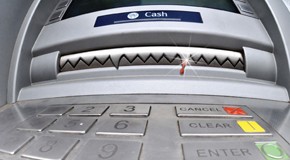
This morning, on my way to work, I stopped by the bank to deposit some checks. Knowing that I was much too early for a teller to be present at the drive through window, I pulled up to the handy dandy automatic teller machine at my local branch. Some months back, the bank had upgraded its hardware to optical character recognition for depositing checks. I think this is a cool feature as it saves me from sleepily misreading or carelessly fatfingering the amounts on the checks. However, in order to use OCR, the ATM must be able to scan the front of each check, which precludes using an envelope – as is traditional for deposits in ATM machines.

Having some experience with the OCR ATM and this machine in particular, I thought nothing of my task, just a quick errand that would only momentarily delay my commute. So I drove up to the machine, dutifully endorsed my checks, and carefully aligned them for depositing according to the easy-to-read sticker below the deposit slot. After proffering my card and punching in my code, the ATM’s maw gaped and hungrily consumed my would-be dollars. However, this morning was not like other mornings and the ATM encountered an error in reading the checks, displaying a message that envelopes were no longer accepted for check deposit. It attempted to feed the lot back out of the slot, crumpling them up just inside the automatic door of the deposit slot. Knowing that the bank personnel were not available at that moment, I resolved to find a workaround.

With headlights in my rearview mirror and fearing for my fingertips, I carefully shifted the edges until I was able to extract the checks and reexamined them. The only interesting variation that I observed was that 2 of the 3 checks were large, preprinted by businesses, while 1 was small and hand-written. Although the slot sticker showed an image of varying check sizes with small checks on top, the machine’s behavior did not conform to this end-user documentation. Fortunately, I was able to manually feed in the checks one at a time, which was not quite the simplest happy path since I was adding each in turn to a single transaction. Just to confirm, I selected the receipt with check images and verified that my scenario had completed successfully, averting a lot of frustration not only for me but for the line of cars inching closer behind me. Still, I’ll think twice about using the ATM outside of normal business hours… no point in pushing my luck.

Image source

E v A

EvA

Back during Test Coach Camp 2012, Michael Larsen made some great recordings of our open space sessions. Subsequently, he published Ken Pier‘s session topic E vs A – Huh? under the title Exploratory vs. Automation in the TWiST podcast feed.

I had fun explaining our testing team’s approach to exploratory testing and automation while learning from some helpful members of the testing community, including Cem Kaner, Doug Hoffman, Matt Barcomb, Phil McNeely, and Michael Larsen.

Check it out!

You can stream these podcasts online or download after registering for the Software Test Professionals’ website, and membership is free.

Here are the direct links (once you log in):

Exploratory vs. Automation, Part 1
Exploratory vs. Automation, Part 2

Image source
(P.S. I can’t resist reading this article that pointed me to the image: The Semiotics of Hello Dolly!)

Big Visible Testing

Presented as an Emerging Topic at CAST 2012

This was my talk proposal:

I have always thought of myself as an agile tester. After all, my development teams have always delivered features in 2 week sprints. My testing activities included reviewing requirements or stories before the planning meetings to assemble a list of questions and test ideas that I would use to approach the work proposed. I participated in a review before code completion that allowed for some exploratory testing, brief and informal though it may have been at times. In the past couple of years, I also planned and coded test automation.

However, over the past year, I have been transforming from a pseudo-agile tester to a true agile tester. Rather than sitting apart from the software developers in my own quality engineering department, I am now seated in the same room as the other employees from a mix of disciplines who are on my product delivery team. Rather than testing in a silo, I have been gradually increasing the visibility of testing activities through exploratory test charter management, defect backlog organization, and paired exploratory testing with both testers and non-testers. The feedback loops have shortened and the abbreviated time between activities necessitated adjusting how I provide information.

Testers are in the information business. We take the interests and concerns of the business as communicated through the product owner – or in my case the product owner team – and combine those with the needs of the customer as expressed in the story and further augment those with our experience using and analyzing software for deficiencies, abberations, and oddities. We draw upon a variety of resources including the experience and perspectives of fellow testers, heuristics, and product history to approach the goal of delivering a product the customer values, focusing especially on the quality aspects of that value.

Now that the audience for my testing comprises a mix of disciplines and the work environment has shifted from a heavier process to transparent, quick information access, I have been experimenting with different ways to execute testing and to represent the outcomes of that testing activity so that the information consumers understand it in ways that best suit each of their perspectives.

In my brief presentation, we will examine 3 different agile team member personas and their implications for presenting and maintaining testing information as well as the inherent tensions between their distinct and various needs. I will trace my learning curve of adjusting to their needs through the various experiments I have completed in this context, though these lessons extend beyond a purely cross-functional agile product development team.

Other testers will come away with a fresh perspective on viewing their product team members and focus on the value testing artifacts provide to a software development team.